Updated September 2026If you are trying to determine whether you can afford a home in Apollo Beach, the mortgage payment is only the starting point.The real cost depends on the home itself, its

Dated: August 1 2026
Views: 42
Should I Buy a Home in Apollo Beach, Florida, Right Now?
Updated August 1, 2026
My short answer is yes, for the right buyer and the right property.
Apollo Beach still offers something that is increasingly difficult to find around Tampa Bay: a laid-back waterfront lifestyle, direct access to Tampa Bay from the waterfront neighborhoods, resort-style communities, and a wide range of home types and prices. Buyers also have more time and negotiating room than they did during the frantic pandemic market.
But this is not permission to buy any house with the word waterfront in the listing.
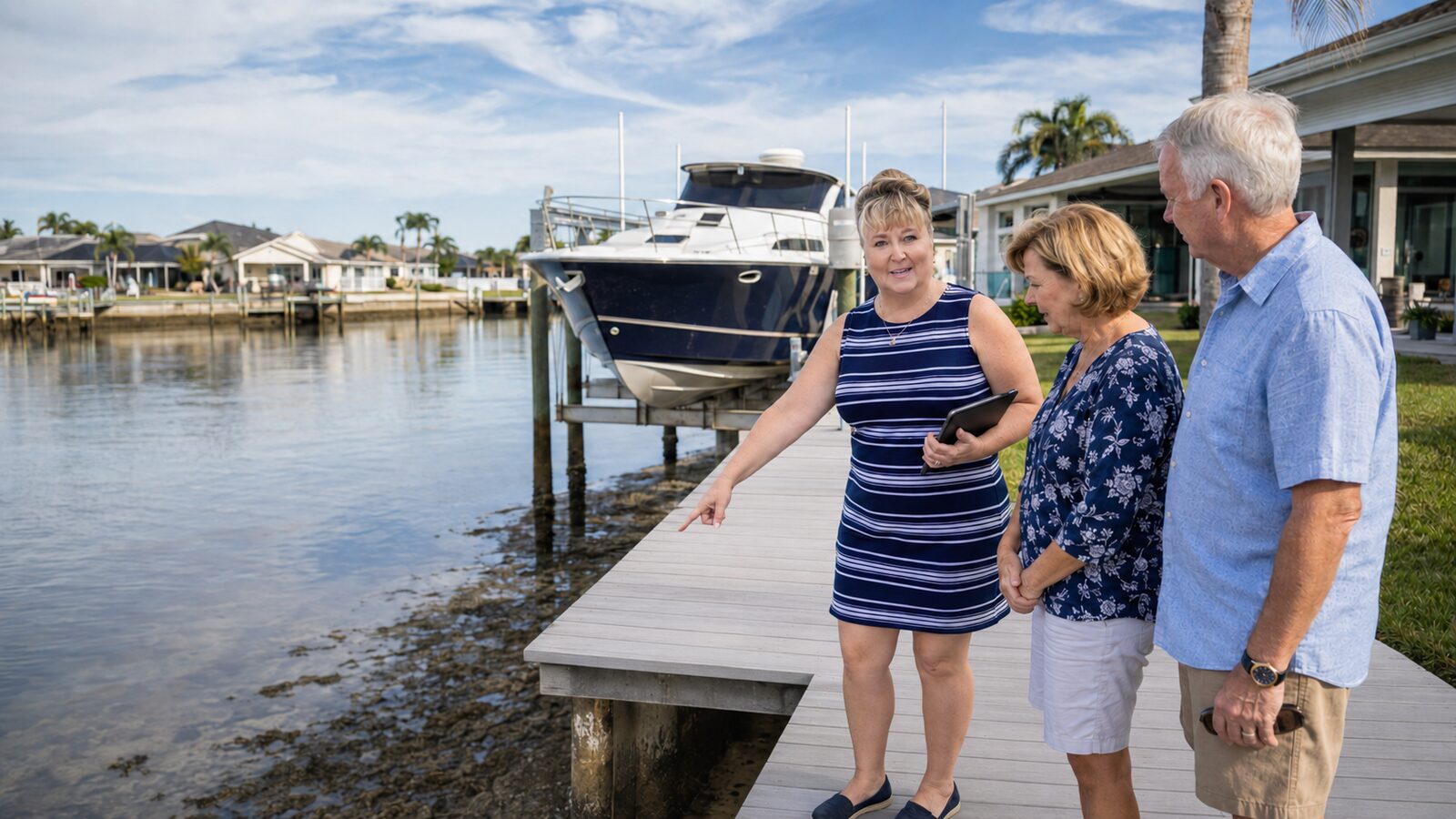
In Apollo Beach, the right canal, elevation, seawall, community, and boat access can matter as much as the house itself. I have seen buyers fall in love with an expansive water view only to learn that their dream boat cannot use the community lift. I have also seen people choose a less expensive neighborhood after falling in love with another one, then realize the amenities and culture of the less expensive community were not interchangeable.
So, should you buy in Apollo Beach right now? Here is the honest answer I give my own buyers.
Why I believe Apollo Beach is worth buying in 2026
The current market gives buyers a combination we have not had in several years: meaningful choice without evidence of a broad local collapse.
In June 2026, Realtor.com classified Apollo Beach as a balanced market. Homes spent a median of 66 days on the market, sold for an average of 98 percent of asking price, and typically closed about 1.8 percent below the final list price. That creates room for thoughtful inspections, seller concessions, repairs, and sometimes a rate buydown. As a heavy listing agent, I can tell you that sellers are prepared and expect to negotiate.
The practical takeaway is not that every Apollo Beach property is appreciating or depreciating. It is that this is a more balanced, property-specific market. Buyers can negotiate, but the best elevated waterfront homes, wide-water lots, and properties that properly accommodate a serious boat can still command a premium.
My favorite question is not, “Can I perfectly time the bottom?” It is this:
If I find the right house, in the right neighborhood, with a payment I can comfortably afford, does buying now put me in a better position than waiting?
For many Apollo Beach buyers, the answer is yes. Buyers waiting to time the bottom historically do not realize they missed those opportunities until they have come and gone.
Apollo Beach still feels small, but it is large enough to support more shopping and dining
One reason we chose Apollo Beach ourselves was the feeling. We first fell in love with one particular neighborhood, but the wider community made us want to stay. It felt comfortable to us wherever we drove. Before long, we were recognizing people at the grocery store and gas station. People waved while walking or sitting on their porches, and neighbors became friends.
The numbers explain why Apollo Beach can retain some of that familiar, small-town feeling while supporting more services.
Census estimates show nearly 12,000 households, an owner-occupancy rate of 85.7 percent, and a median household income of $127,617. The population is also genuinely multigenerational: 24.9 percent of residents are under 18 and 17.9 percent are 65 or older.
That mix supports the lifestyle I see every day. Apollo Beach attracts retirees, MacDill employees willing to make the commute for a quieter home life, remote-working executives, young families, and multigenerational families who want to live near one another.
The housing choices reflect that diversity. There are gated 55-plus neighborhoods away from and near the water, low-maintenance villas in the mid-$300,000s, traditional family neighborhoods, and waterfront estates that can reach $4 million. In some communities, parents can own a larger waterfront home while adult children or other relatives live nearby in a villa.
Shopping and dining are catching up with the population
Apollo Beach is no longer a place where every shopping or dining trip requires driving deep into Brandon or Tampa. In addition to its historic dining choices including boat up restaurants Circles and Finns, Apollo Beach had a variety of about 12 great eat in establishments prior to the recent growth in 2026.
Starting with the addition of Starbucks in 2025 the area has been a steady attraction of name brand shopping and dining choices. The new Walmart Supercenter opened in January 2026, and Newer dining around the community includes Panda Express, Wendys, Chipotle, and Chipotle along with a growing group of restaurants and quick-service concepts in and around Waterset which includes Rock N Roll Sushi, The Hungry Greek, Pacific Counter, Wingstop, and The Greyson, with additional concepts announced. ChickFil A is scheduled near Mirabay in Early 2027
There is also legitimate progress toward a Costco-anchored mixed-use project near Covington Garden Drive and Big Bend. This development will Anchor a Target Store along with several other well known establishments. A welcome addition to the area for sure!
The larger point is still positive. Population growth is bringing more restaurants, shopping, recreation, and family activities. The 85-acre SouthShore Sportsplex, Apollo Beach Park and Recreation Center, and newer activity-based businesses have expanded what families can do close to home.
How does Apollo Beach waterfront value compare with other Tampa Bay areas?
Apollo Beach often delivers more house, yard, dock, and neighborhood amenity for the money than comparable direct-water property in St. Petersburg or desirable parts of Bradenton. Ruskin and Little Harbor can cost less, but their mix of condos, townhomes, older single-family homes, and boating conditions makes direct comparison more difficult.
Here is a representative snapshot of active asking prices I reviewed on August 1, 2026. These are not appraisals, closed-sale statistics, or promises of value. They are a practical illustration of what buyers were seeing in the market.
Waterfront market | Representative active asking-price pattern | Important context |
Apollo Beach | Older direct-canal homes can begin around $700,000. Newer or resort-community waterfront commonly reaches $1 million to $2.5 million or more. Premium bayfront homes can be higher. | Strong combination of bay access, pools, yards, docks, and resort-style communities. Canal and boat restrictions vary. |
Ruskin and Little Harbor | Roughly $450,000 to $1.4 million or more across a broad mix of waterfront products. | Lower entry prices are possible, but condos, townhomes, river access, canal access, and direct bay access are not interchangeable. |
Bradenton waterfront | Direct saltwater single-family examples commonly start near $900,000 and extend above $2 million. | Location, bridge clearance, waterway, and distance to the Gulf create large differences. |
St. Petersburg waterfront | Conventional direct-dock single-family examples commonly begin around $950,000 and extend well above $2.7 million, with premium estates much higher. | Buyers often pay more for proximity to St. Petersburg's urban amenities and established Intracoastal neighborhoods. |
The comparison is based on active waterfront listings in Apollo Beach, Ruskin, Bradenton, and St. Petersburg. An actual valuation requires recent closed comparables matched for water access, elevation, flood history, condition, dock, seawall, pool, lot, view, and community.
The real Apollo Beach value proposition is not simply “waterfront for less.” It is the possibility of finding a waterfront lifestyle specifically matched to how you plan to use it.
Not all Apollo Beach waterfront is equal
I generally explain the choices in three groups.
Direct saltwater canal homes
These can offer convenient access to Tampa Bay, but buyers need to study the route, not just the dock.
Some canals are narrow. Turning radius can limit the maximum practical boat length. Low-tide depth can determine whether a boat's draft is compatible with the property. Bridges, idle-speed zones, bends in the canal, dock placement, lift capacity, and the time required to reach open water all affect daily use.
Canal life also comes with moments that are difficult to put on a spreadsheet. Dolphins and manatees may pass behind the house. You can step outside, lower the boat, and make the water part of an ordinary weekday.
Lagoon homes
Lagoon properties can have expansive, lake-like views that are beautiful on all the days you are not boating. The tradeoff is that the Lagoon system is non-tidal- separating the tidal water from the canal water requires a community boat lift to reach Tampa Bay.
That additional step will not bother every buyer, but it sometimes reduces the pool of future buyers who want unrestricted direct access. It can also make a property unsuitable for a particular vessel.
I recently worked with a couple approaching retirement who had thoughtfully planned their dream. Both had completed scuba certifications and wanted a cabin boat suitable for their retirement diving lifestyle. The boat they envisioned would be heavier and could exceed 35 feet.
They loved the expansive lagoon views in MiraBay, but the community's official waterway rules state that a vessel longer than 35 feet may not use the lagoon boat lift. That ruled out the lagoon side for them.
It was disappointing, but discovering the restriction before buying protected their retirement plan. The purpose of the house was to support the life they had imagined, not force them to abandon the boat they had worked toward.
Bayfront and wide-water homes
Bayfront property will generally command the highest values because the view, scarcity, and access are difficult to reproduce. Wide-water canal intersections and protected open-water views can also earn a premium.
The lesson is simple: never compare two waterfront homes by square footage and bedroom count alone.
Flood risk and elevation have become part of value
Waterfront living and flood exposure are connected, but risk can change dramatically from one parcel to the next.
Hurricane Helene in September 2024 was a defining event for this area. The National Hurricane Center reported maximum storm-surge inundation of 5 to 7 feet above ground level within Tampa Bay. That does not mean every Apollo Beach home received that amount of water. Some lower-elevation properties took several feet of interior water, while elevated homes did not. The majority of the gated waterfront communities were built after the year 2000 which required a minimum elevation of 10ft. These communities as a whole would have had little to no flood water impact from that historic storm due to that higher elevation requirement when built. New waterfront homes are now required to be constructed at 12 feet or higher.
As a simple but not perfect rule- homes on the west side of Highway 41 will be in a flood zone and if you have a mortgage loan, they will require flood insurance. Homes east of Highway 41 will likely not be in a flood zone and would not require flood insurance. There are some exceptions on either side of the highway but this is a simple rule of thumb to consider while home shopping.
In my experience driving these neighborhoods and evaluating homes, newer gated and resort-style communities that are built at the higher elevations are commanding a premium for that elevation, partly because the homes are newer and partly because reduced vulnerability has real value.
At the same time, lower-elevation canal neighborhoods can present remarkable opportunities. It is possible to find a beautiful waterfront home with a pool, no HOA, and no CDD around the $700,000 range with direct access within minutes from your back door to Tampa Bay. The lower price is not free money. It may reflect elevation, age, prior storm damage, insurance expense, or individual responsibility for the seawall.
Never rely on a neighbor's recollection or the visual height of the front door. For every serious property, verify the official flood map, evacuation zone, elevation certificate, permit history, prior flood or insurance claims disclosed by the seller, and a current property-specific insurance quote.
A CDD is not automatically a negative
Buyers sometimes see a CDD tax (Community Development District assessment) on the tax bill and immediately reject the neighborhood. I think that can be shortsighted.
The better question is: what does the assessment fund, and what major costs does it shift away from the individual homeowner?
MiraBay is a useful example. Its amenities include 2 resort-style pools, a 24hour fitness center, tennis and pickleball courts, basketball, walking trails, parks, lagoon, boating launch, café, lounge, and dedicated activity coordinator. This is a golf cart friendly community with dozens of resident clubs to fit every lifestyle and interest.
The CDD will often cover the major infrastructure of a neighborhood like gates, clubhouse and seawall. In many older canal neighborhoods, each homeowner is individually responsible for the seawall behind the property.
That difference matters. A seawall has a finite lifespan, many and dare same most of these lifespans are beginning to age out. Replacement can cost hundreds to more than $1,000 per linear foot, depending on material, access, engineering, site conditions, and permitting. A buyer should inspect it as seriously as the roof.
CDD assessments usually contain two concepts that buyers should separate:
The CDD portion of your tax bill will be based on lot size- always. Consider this when looking for that separation between neighbors and expansive lots. Before calling a CDD good or bad, review the actual tax bill, remaining bond schedule, current budget, district responsibilities, HOA fee, and total monthly carrying cost.
The drawback newcomers do not expect
Apollo Beach has grown faster than some of its surrounding infrastructure.
People moving from states where nearly every developed road has curbs, sidewalks, and streetlights can be surprised by parts of Florida. Some Apollo Beach roads still feel rural with no formal sidewalks and large distances between street lights. Traffic pinch points and roadway construction can be frustrating. This is not unique to Apollo Beach, but it is something buyers should experience before committing.
I encourage clients to drive a neighborhood at different times, then drive the routes they will actually use. Test the MacDill commute, school drop-off, grocery run, boat ramp, and evening trip to dinner. A home is not only the structure. It is the pattern of daily life around it.
The biggest Apollo Beach buying mistake I see
The biggest mistake is settling for the wrong neighborhood because the house costs less.
A buyer falls in love with the vibe, amenities, or neighbor culture of one community. Then a larger or less expensive house appears somewhere else, and they assume the experience will be basically the same.
It often is not.
Apollo Beach neighborhoods vary dramatically. One may be active and social, with resort amenities, golf carts, clubs, and regular events. Another may be quiet, independent, and free of HOA or CDD obligations. One may offer a wide lagoon view but limit the boat. Another may offer direct bay access but require the owner to budget for an aging seawall.
Price matters, but price should not erase the reason you wanted to move here.
My Apollo Beach waterfront due-diligence checklist
Before writing an offer, I want a buyer to answer all of these questions:
So, should you buy a home in Apollo Beach right now?
Yes, if Apollo Beach fits your lifestyle and you choose the property with discipline.
The current balanced market gives buyers choices and negotiating opportunities. The community's population can now support better dining, shopping, and recreation while still offering the familiar, neighborly feeling that drew us here. Waterfront homes can compare favorably with St. Petersburg and Bradenton, particularly when a pool, dock, yard, bay access, and resort amenities are part of the equation.
I would hesitate if a buyer were stretching beyond a comfortable payment, relying on an unconfirmed development announcement, ignoring flood and insurance costs, or compromising on the neighborhood culture that made them love Apollo Beach in the first place.
The right home should support the life you are moving here to live. If that life includes mornings on the canal, dolphins behind the house, neighbors who wave, weekends on Tampa Bay, or multiple generations living close together, Apollo Beach deserves serious consideration in 2026.
If you are comparing Apollo Beach waterfront homes, bring the specifications for the boat you own or plan to buy. We can evaluate the house, waterway, elevation, seawall, carrying costs, and neighborhood together before you make the decision.
Shawna Calvert
27North Realty
shawna@27northrealty.com
509-294-6818

Shawna Calvert: A Realtor Committed to Excellence, Service, and Client SatisfactionIf you are searching for a real estate agent in Apollo Beach or across the Tampa Bay waterfront market, you deserve t....
Updated September 2026If you are trying to determine whether you can afford a home in Apollo Beach, the mortgage payment is only the starting point.The real cost depends on the home itself, its
Discover the possibilities at 819 Golf and Sea Boulevard, an approximately 3.29-acre residential development parcel positioned in one of South Hillsborough County’s growing communities.Offered
What I wish snowbirds knew before they made an offer in Apollo BeachEvery October my phone starts doing the same thing.It is a 416 or a 613 or a 905 area code, and the person on the other end has
All four are knowable before you write an offer. Most people ask them in the wrong order.I live in MiraBay and I boat these waterways. Most of what follows are questions I had to answer for myself
 Copyright © MFRMLS.com All information deemed reliable but not guaranteed. All properties are subject to prior sale, change or withdrawal. Neither listing broker(s) or information provider(s) shall be responsible for any typographical errors, misinformation, misprints and shall be held totally harmless. Listing(s) information is provided for consumers personal, non-commercial use and may not be used for any purpose other than to identify prospective properties consumers may be interested in purchasing. Information on this site was last updated Last updated on September 25, 2026 2:58 AM UTC The listing information on this page last changed on Last updated on September 25, 2026 2:58 AM UTCd. The data relating to real estate for sale on this website comes in part from the Internet Data Exchange program of MFR MLS.
All information deemed reliable but not guaranteed. All properties are subject to prior sale, change or withdrawal. Neither listing broker(s) or information provider(s) shall be responsible for any typographical errors, misinformation, misprints and shall be held totally harmless. Listing(s) information is provided for consumers personal, non-commercial use and may not be used for any purpose other than to identify prospective properties consumers may be interested in purchasing.
Updated on September 25, 2026 2:58 AM UTC
Copyright © MFRMLS.com All information deemed reliable but not guaranteed. All properties are subject to prior sale, change or withdrawal. Neither listing broker(s) or information provider(s) shall be responsible for any typographical errors, misinformation, misprints and shall be held totally harmless. Listing(s) information is provided for consumers personal, non-commercial use and may not be used for any purpose other than to identify prospective properties consumers may be interested in purchasing. Information on this site was last updated Last updated on September 25, 2026 2:58 AM UTC The listing information on this page last changed on Last updated on September 25, 2026 2:58 AM UTCd. The data relating to real estate for sale on this website comes in part from the Internet Data Exchange program of MFR MLS.
All information deemed reliable but not guaranteed. All properties are subject to prior sale, change or withdrawal. Neither listing broker(s) or information provider(s) shall be responsible for any typographical errors, misinformation, misprints and shall be held totally harmless. Listing(s) information is provided for consumers personal, non-commercial use and may not be used for any purpose other than to identify prospective properties consumers may be interested in purchasing.
Updated on September 25, 2026 2:58 AM UTC
33. Required DMCA Notice
The Digital Millennium Copyright Act of 1998, 17 U.S.C. §512, the DMCA, provides recourse for copyright owners who believe that material appearing on the Internet infringes their rights under U.S. copyright law. If you believe in good faith that any content or material made available in connection with our website or services infringes your copyright, you (or your agent) may send us a notice requesting that the content or material be removed, or access to it blocked. Notices must be sent in writing by email to DMCAnotice@MLSGrid.com. The DMCA requires that your notice of alleged copyright infringement include the following information: (1) description of the copyrighted work that is the subject of claimed infringement; (2) description of the alleged infringing content and information sufficient to permit us to locate the content; (3) contact information for you, including your address, telephone number and email address; (4) a statement by you that you have a good faith belief that the content in the manner complained of is not authorized by the copyright owner, or its agent, or by the operation of any law; (5) a statement by you, signed under penalty of perjury, that the information in the notification is accurate and that you have the authority to enforce the copyrights that are claimed to be infringed; and (6) a physical or electronic signature of the copyright owner or a person authorized to act on the copyright owners behalf. Failure to include all of the above information may result in the delay of the processing of your complaint.
 All information deemed reliable but not guaranteed. All properties are subject to prior sale, change or withdrawal. Neither listing broker(s) or information provider(s) shall be responsible for any typographical errors, misinformation, misprints and shall be held totally harmless. Listing(s) information is provided for consumer's personal, non-commercial use and may not be used for any purpose other than to identify prospective properties consumers may be interested in purchasing. The data relating
to real estate for sale on this website comes in part from the Internet Data Exchange program of the Multiple Listing Service. Real estate listings held by brokerage firms other than 27North Realty may be marked with the Internet Data Exchange logo and detailed information about those properties will include the name of the listing broker(s) when required by the MLS. Copyright ©2026 All rights reserved.
Last Updated: September 25, 2026 2:31 AM UTC
Show More...
All information deemed reliable but not guaranteed. All properties are subject to prior sale, change or withdrawal. Neither listing broker(s) or information provider(s) shall be responsible for any typographical errors, misinformation, misprints and shall be held totally harmless. Listing(s) information is provided for consumer's personal, non-commercial use and may not be used for any purpose other than to identify prospective properties consumers may be interested in purchasing. The data relating
to real estate for sale on this website comes in part from the Internet Data Exchange program of the Multiple Listing Service. Real estate listings held by brokerage firms other than 27North Realty may be marked with the Internet Data Exchange logo and detailed information about those properties will include the name of the listing broker(s) when required by the MLS. Copyright ©2026 All rights reserved.
Last Updated: September 25, 2026 2:31 AM UTC
Show More...
